


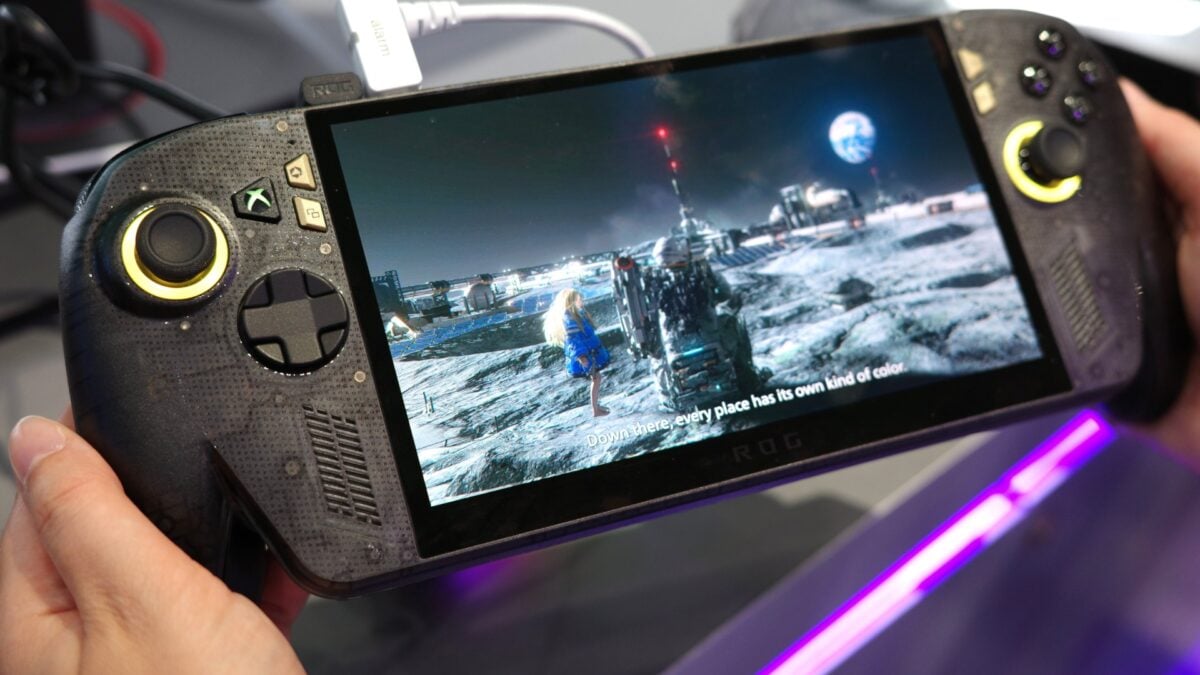
OLED handhelds are just better. Cast your eyes back to the Nintendo Switch OLED and remember its improved visuals. The Steam Deck OLED fixed the few lingering problems of the original 2022 handheld PC. And the new Asus ROG Xbox Ally X20 similarly fixes many of the niggling details of the original Xbox Ally X. It’s also certain to cost an enormous sum of cash.
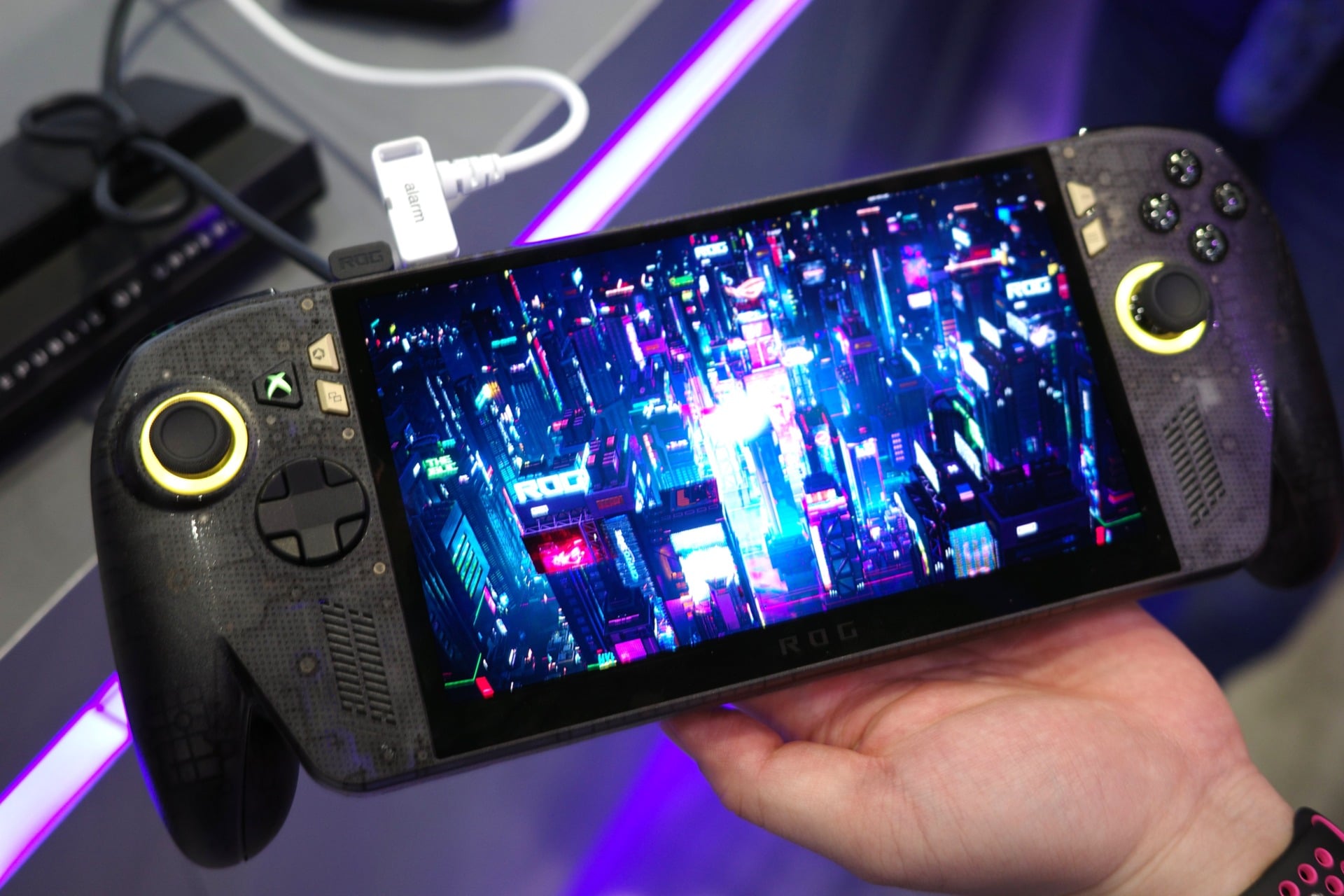
I had my hands on the new ROG Xbox Ally X20 for a hot minute, and I could tell it’s already the best version of what this handheld could be. First, the screen is now a fuller 7.4 inches rather than the original Xbox Ally’s 7 inches. In reality, that means Asus cut down the bezels to make the screen feel fuller. That’s necessary if you want to get the most out of Asus’ Nebula OLED panel.
Even in a dim and packed conference hall, the X20’s screen felt surprisingly bright and clear. That’s likely due to its claimed 1,000-nit peak brightness in HDR and 600-nit peak brightness in SDR. The screen supports VESA DisplayHDR True Black 1000 and a 120Hz refresh rate, with AMD FreeSync for variable refresh rate.
Even among other OLEDs, the Ally X20’s screen stands out. A $2,000 Legion Go 2 with an 8.8-inch OLED display is glossier, which means it delivers pretty visuals at the risk of glare. The Xbox Ally X20 includes an antireflective coating, which reduced those issues even under a swarm of lights in a crowded convention hall.
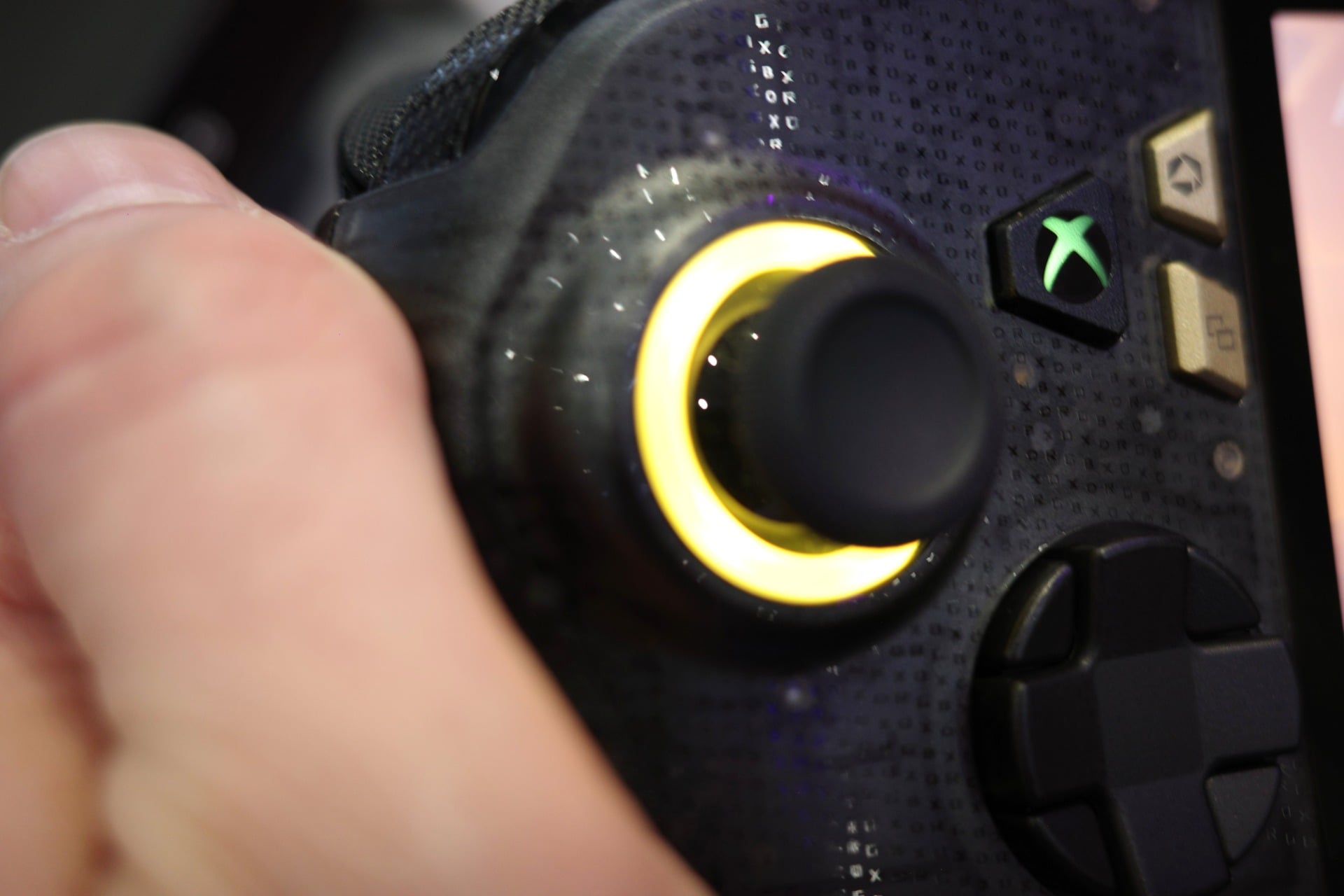
Asus also replaced its old joysticks with TMR sticks. That means the new device uses tunneling magnetoresistance technology, a type of magnetic sensing that greatly reduces the likelihood of false inputs caused by stick drift. Those sticks also include metallic caps, and they felt smooth to turn under my thumbs. Asus also told me it had added RGB effects that track the sticks’ movements.
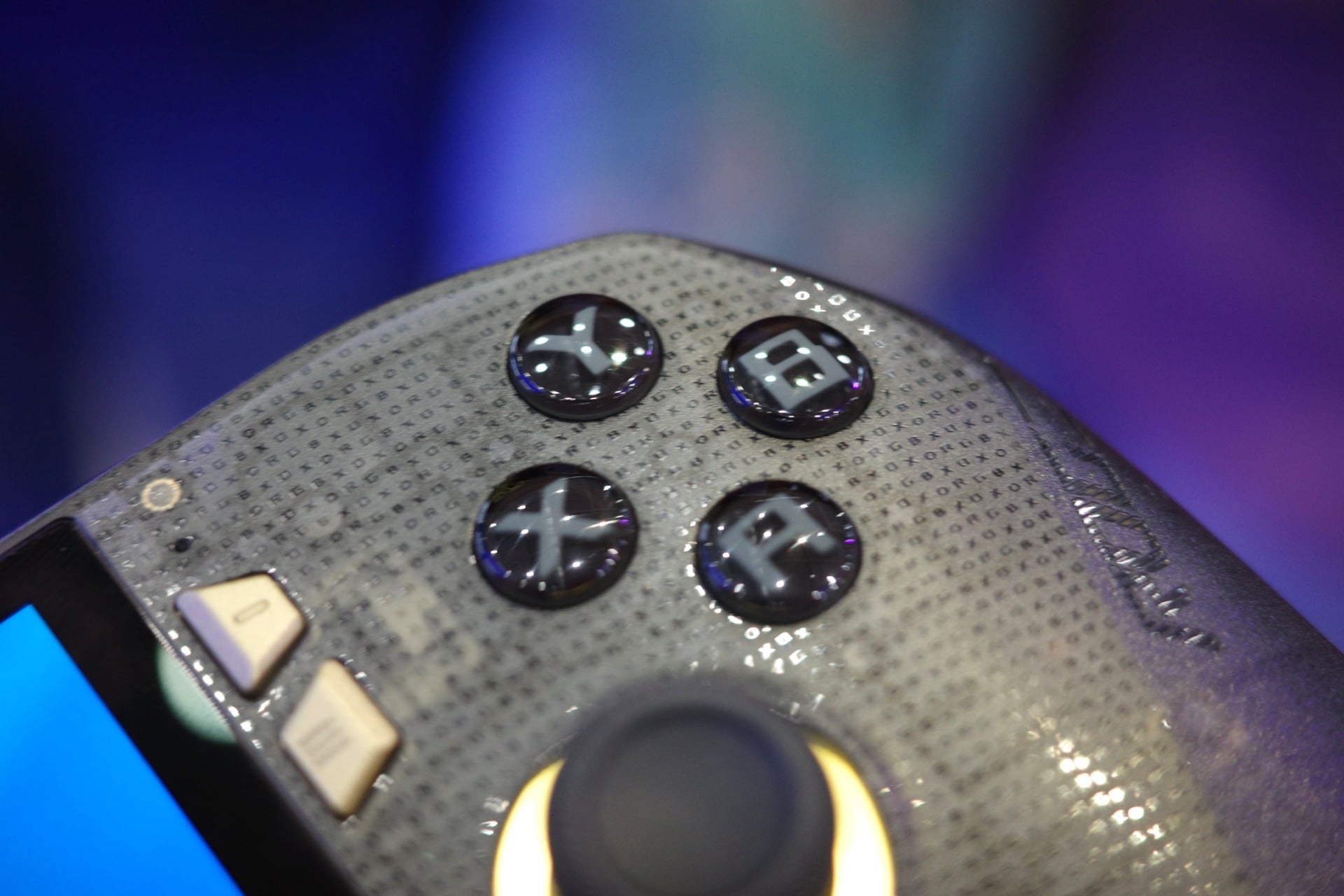
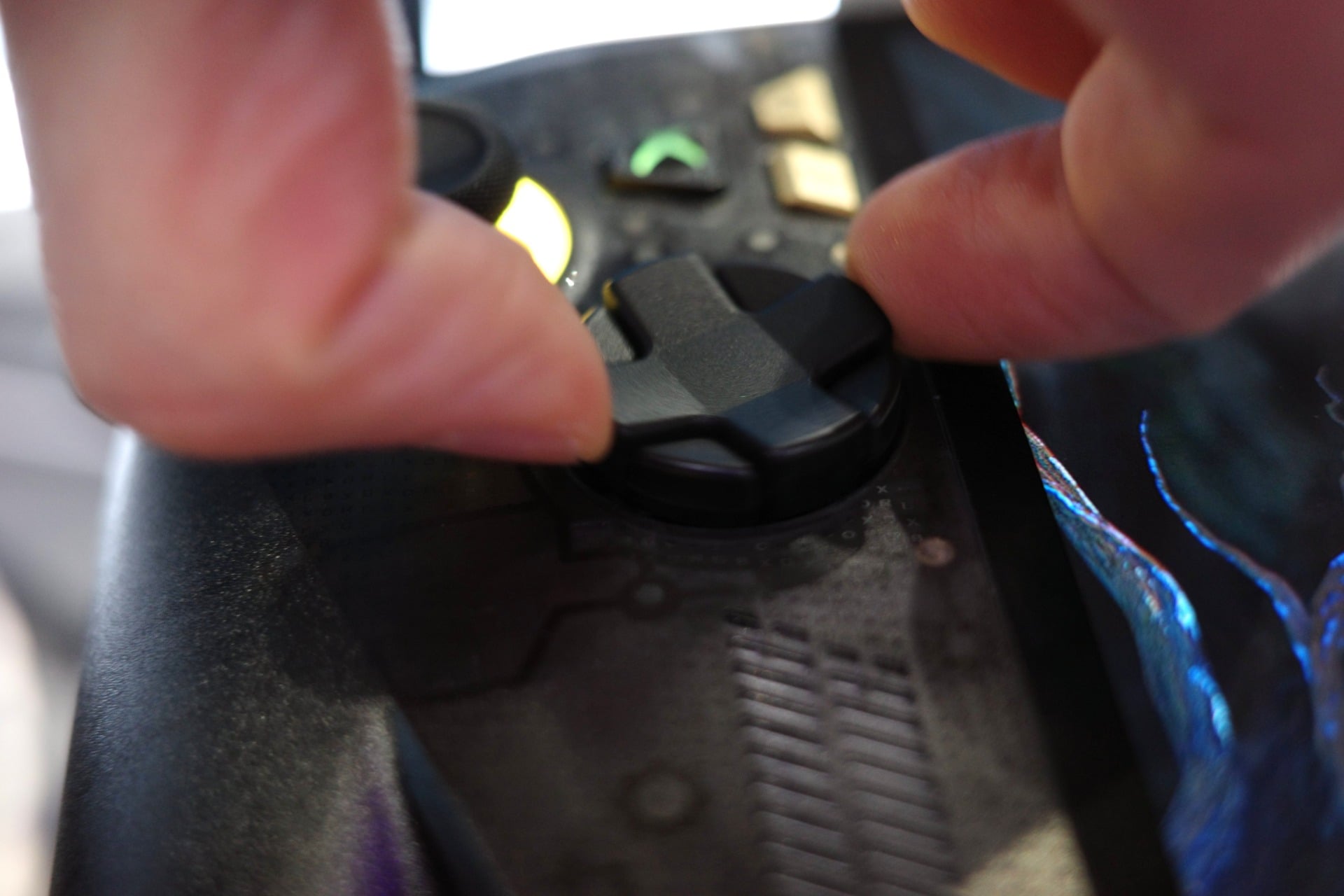
Asus also made several minor changes to the device’s shell. For one, the backside now features rubberized grips that make it feel more comfortable in the hand. The controls now include a “transforming D-pad” that lifts and spins in case you want to feel your diagonals more easily. There are even subtler tweaks, like the face buttons, which are now lower-profile than before, so the “B” button no longer overhangs the side of the grip.
All these changes to the screen and shell won’t affect how this device performs. It’s still using the AMD Ryzen Z2 Extreme APU from last year. The performance on the original system was solid enough for most games you play, even major AAA titles. It’s also still packing 24GB of RAM and a 1TB SSD.
New systems built around Intel’s ARC G3 Extreme have already shown that they can outperform AMD’s most recent handheld chip. Unfortunately, any devices with that chip won’t be cheap. MSI has told Gizmodo that it expects to launch the upcoming Claw 8 Ex AI+ with Intel inside with an MSRP of $1,500. Meanwhile, Asus has only shown its X20 in a bundle with its ROG XReal R1 AR glasses. There’s no price attached to this bundle, but those glasses alone cost $850.
Asus told Gizmodo that the company was analyzing “à la carte options” to separate its handheld from the glasses. Let’s hope they do, since if the ROG Xbox Ally X20 can come in under $1,500, it may be worth a look. The handheld should be out sometime later this year, per the company.
Even saying that $1,400 is acceptable for a handheld in the year of our Lord 2026 feels like being jabbed by a hot needle. Asus has somehow managed to resist the temptation to hike the ROG Xbox Ally X to $1,000, at least for now. That system is now the best bang for your buck handheld, since Valve raised the Steam Deck OLED’s price last month. But it seems like this cycle, any mobile gaming device you buy may cost a princely sum.


